Menopause at work
Session 2: Creating conditions to thrive
Supporting a team member through menopause starts with understanding what helps them work well.
Moving through a different life stage such as Menopause may impact how someone contributes to a workplace.
This does not erase their valuable experience, skills, judgement, relationships and vital role in the system.
It does however mean that the conditions they need to do their best work may need to change.
This resource gives you some tools to start thinking about and co-creating this change, developed to support Session 2 of CPA Australia’s Menopause at Work series: A Manager Perspective on the 24th September 2026.
In case you missed it:
Takeaways from Session 1: The Organisational Perspective

A human-centred framework
for high performance
People do their best work when what we ask of them is supported by the conditions we create.
My High Performance, the Human Way framework brings together two connected areas:
Work demands: how work is structured, what people are expected to deliver, and whether those expectations are sustainable.
Work environment: the resources, relationships, and everyday behaviours that shape people’s experience of work.
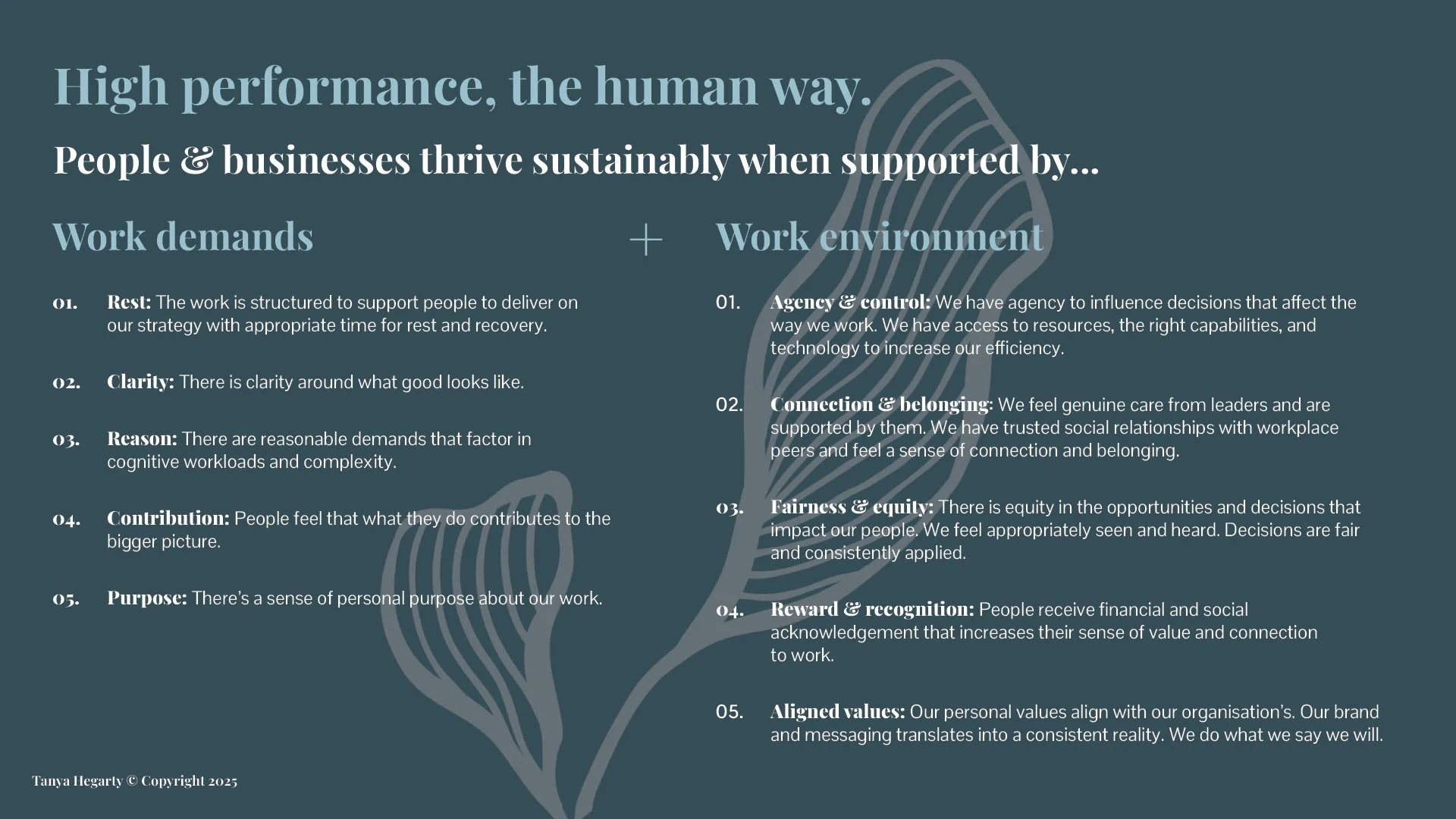
The 10 Question Tool (below) uses this framework to reflect on how Managers can co-create the conditions that will support their team members through menopause.
Questions to co-create change
For Managers and Teams
How to use these questions
Start with two
Choose one question from Work demands and one from Work environment that feel most relevant to your team.
Choose the right starting point
Is talking about menopause new territory? Reflect first. Consider what support already exists, what you can change as a manager, and where you need help. Use the questions when designing initiatives, but leave room for employees to shape the response before decisions are made.
Is the menopause conversation already underway? Invite your team to explore the two questions with you. Look at how support works in practice, what gets in the way, and what you could improve together.
NOTE:
At either stage, consider whether people feel safe to contribute. Explain why you’re having the conversation and offer a private way to share ideas. Nobody needs to disclose their menopause status or personal health information to participate.
Use team discussions to improve shared working conditions.
Agree individual support privately with the person concerned.
Turn the conversation into a practical change
Choose one change to experiment with. Agree who will take it forward, what improvement you hope to see, and when you’ll review it.
Keep the first step manageable. Where a change sits outside your authority, identify who needs to help.
Return to the questions as you learn what works.
10 Questions Tool
Work Demands
1. Rest
ASK: How could we organise work so women experiencing menopause can take the breaks and recovery time they need?
Consider meeting schedules, shift coverage, back-to-back tasks and expectations outside working hours. Look at whether taking a break is genuinely possible within the workload.
2. Clarity
ASK: How can we make priorities and expectations clear enough to allow flexibility in how, when or where work gets done?
Distinguish essential outcomes and deadlines from habits about how work “should” happen. Agree what successful delivery looks like when working arrangements change.
3. Reason
ASK: What could we change about the pace, volume or complexity of work when menopause makes existing demands harder to manage?
Explore competing deadlines, interruptions, multitasking and time for focused work. Let the individual’s experience guide any adjustments, and review how changes affect the wider team’s workload.
4. Contribution
ASK: How can we adapt work while keeping women’s skills and experience central to what the team is trying to achieve?
Look for ways to maintain meaningful responsibility and influence. Check that support isn’t inadvertently removing opportunities to contribute to decisions, projects or mentoring.
5. Purpose
ASK: How can we ensure support through menopause helps women stay connected to the work and career goals that matter to them?
Make space for conversations about what someone wants to continue, develop or pursue. Avoid assuming that needing support means wanting less challenge or having less ambition.
Work Environment
6. Agency & control
ASK: How can women experiencing menopause have more say in the working conditions and adjustments that affect them?
Explore flexibility, the physical workspace and access to useful resources. Ask what would help, agree what is workable and allow for needs to change.
7. Connection & belonging
ASK: What would help someone trust that they can ask for menopause support and continue to feel a valued part of the team?
Consider everyday responses to sensitive issues, the quality of working relationships and opportunities for private conversations. Check that changed hours or work locations don’t leave someone out of important discussions or team connections.
8. Fairness & equity
ASK: How can we make menopause support fair and accessible across different roles, shifts and working arrangements?
Consider who can easily use existing support and who faces barriers. Where the same adjustment isn’t possible for everyone, explore other ways to meet the need while protecting personal privacy.
9. Reward & recognition
ASK: How can we ensure women’s contributions continue to be recognised when menopause changes their hours, visibility or way of working?
Examine whether recognition depends too heavily on constant availability or being seen in the workplace. Consider how valuable work, including mentoring and sharing expertise, is acknowledged.
10. Aligned values
ASK: What needs to change so our everyday response to menopause reflects the care and support we say we stand for?
Compare stated commitments with what happens when someone requests flexibility or raises a concern. Identify where habits, decisions or performance expectations undermine those commitments.
High performance,
the human way.

I’m Tanya Hegarty, a people strategist.
I work with CEOs and executives to align people with business strategy, so everyone is moving in the same direction.
I help make sure your people can execute the strategy in a way that’s good for people and good for business.
That means making sure your culture supports what the business is trying to achieve.
When that’s not happening, we work out what’s getting in the way.
My work is supported by over 25 years leading and consulting in people strategy and change.
How I work with you
-

1. Find out what’s really going on
We examine the challenge, listen to what people are experiencing and identify what might be driving it.
That includes surfacing organisational ‘skunks’: those persistent, pungent problems that permeate the whole system and have lingered so long that everyone has become used to the smell.Together, we get clear on the opportunities and what needs attention.
-

2. Understand what needs to change
We connect those insights to your business priorities and shape a practical response.
That might mean adjusting work demands, strengthening leadership capability, or addressing behaviours that undermine your intentions.
We identify where to start and what your organisation and your people can realistically sustain. -

3. Support the change in practice
Where you need support, I work alongside you to co-create change with your people, and translate strategies into practice.
We make space for learning, assess what’s working, and adjust what isn’t, building the capability and ways of working that help change last.
I’ve worked with…



Latest Insights:
Support Your Gen X-Factor,
or Face Your Gen-Xodus
Organisational systems and a culture of silence are failing some of our most vital female leaders through a natural stage of life.
What are the stakes? And how do we build organisations that are resourced and ready to support women, early and proactively?