Make Growth Stick: A Guide to Reflective Practice
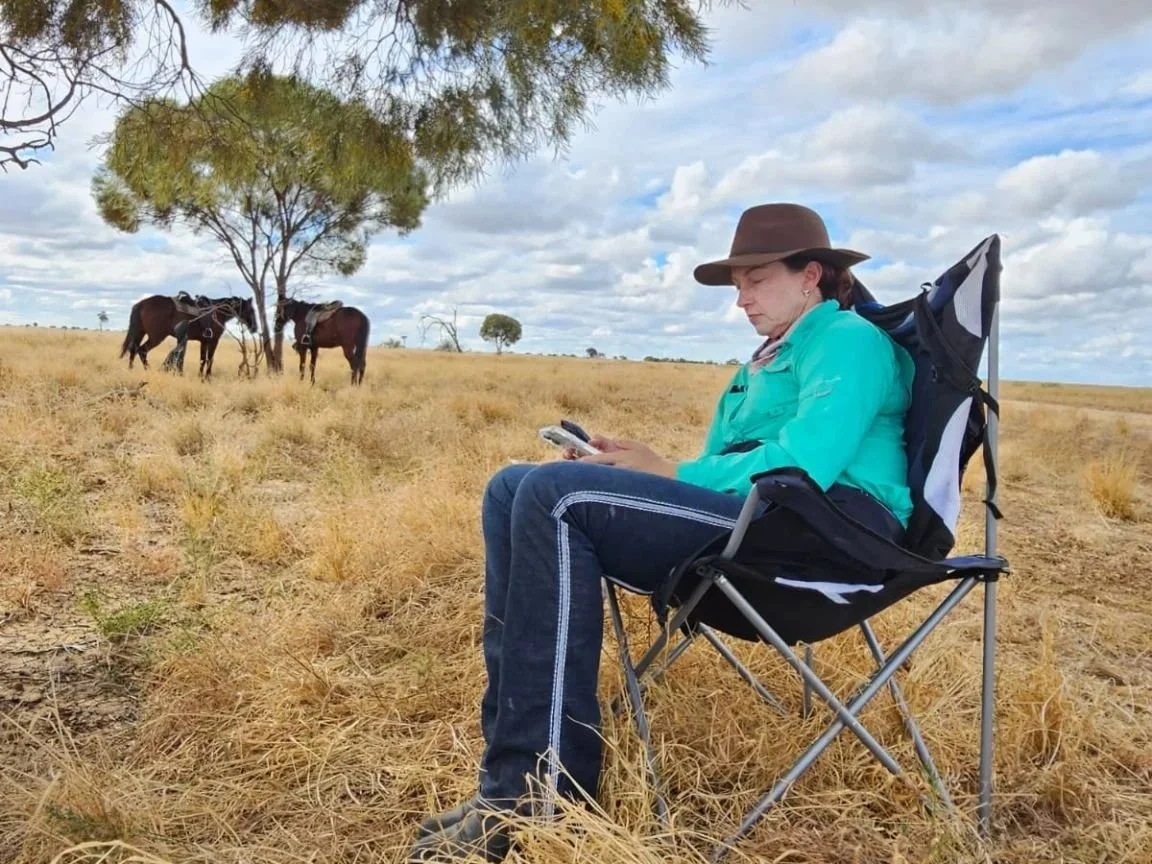
I’m stoked and somewhat surprised by the response I’ve gotten from sharing my adventures on the Outback Queensland Cattle Drive. Weeks later, I’m still greeted by a steady flow of messages about it.
I know the thought of galloping off into the sunset drove a lot of curiosity, but many also wanted to know more about the personal growth side of things.
Thankfully, I’ve got a lot to say on the topic!
Last month, I wrote about the cattle drive as a heat experience: an unfamiliar and challenging experience that can catalyse developmental growth. But that’s only one part of the equation.
Perhaps the most important part begins after the experience, through a process called reflective practice. This is the deliberate process of examining an experience, noticing what it reveals about how you think and respond, and using that insight to make a different choice next time.
Reflective practice is the translation piece: the part where a good story becomes an experience that changes you.
There’s plenty written about reflective practice in theory, but I’ve noticed that people often struggle to do it well in practice. (ha!)
Here, I want to share four ingredients to get the most out of a transformative experience.
4 Tips for Reflective Practice:
1) What you reflect on counts: Step outside the familiar
You could reflect on any ordinary day at work. In fact, we all should from time to time.
The problem is, familiar environments can hide familiar patterns. We know the people, understand the rules, and have established ways of getting through the day. We’ve done things this way so often, it’s hard to step out of auto-pilot, and even harder to remove the blinkers of what we’ve deemed “normal” to examine patterns clearly.
Change the setting and those automatic responses become much easier to see.
On the cattle drive, we couldn’t execute a fixed plan because there wasn’t one. Where we camped, which route we took and when we stopped depended on the land, the weather and the cattle. This sense of being unbuoyed by routine was uncomfortable: Noticing the discomfort and examining “why” was a great starting point for reflection.
How to practice:
Put yourself somewhere unfamiliar, where you don’t quite know what you’re doing, and notice what you reach for.
Do you take control? Wait for permission? Try to prove yourself? Make yourself useful? Go quiet? Move faster? Look after everyone else?
These responses aren’t necessarily bad. Many of them became habit because they helped us succeed at some point. The question is whether they are serving us in this moment, or whether we are repeating them because they’re familiar.
You don’t need to cross Queensland on horseback to find out. Travel somewhere you don’t speak the language. Join a group where you are a beginner. Say yes to a role that asks something new of you.
Choose something that takes you out of autopilot, without pushing you so far that all you can do is endure it. Then pay attention.
2) Catch yourself in the act: Separate what happened from the story you made of it
Reflection is sometimes more useful when you collect the evidence in the moment, before hindsight tries to rewrite the story.
To do this well, it’s important to separate observation (what can be materially observed) from your interpretation (the meaning made, or stories we tell).
For example:
“I offered to take over” is an observation.
“No one else was capable” is an interpretation.
We’re very good at producing explanations that preserve our existing view of ourselves. Try to catch yourself creating stories that explain away your actions.
How to practice:
During the experience, or as soon as you can afterwards, ask:
What happened?
What did I notice in my body and mind?
What was my first impulse?
What did I actually do?
What was I trying to achieve, prevent or protect?
Where else does this response appear in my life or work?
If someone shared the experience with you, ask what they noticed: their observations and interpretations. The same event can produce two completely different accounts.
Journal, record a voice note or talk it through. If you use an AI tool, give it your observations and ask it to identify repeated language, or challenge your account with questions you haven’t considered.
3) Ask “Is this true to me?”: Don’t just take the first answer
Reflective practice becomes really useful when we dig beneath surface-level behaviours and uncover the thoughts, beliefs, opinions and values that drive them.
This isn’t always obvious.
We like to think of ourselves as logical, sensible and authentic. Yet we don’t always act in alignment with what matters to us.
We’re shaped by all sorts of things: relationships, responsibilities, culture and experience.
By exploring why we act the way we do, we can recognise which influences are at play, and to what degree they’re affecting our decisions, so they don’t take the wheel without us knowing.
How to practice:
Ask yourself:
“Is this way of behaving/living/working true to me?”
Don’t just take the immediate “yes”. Dig deeper. Try to get beyond the first answer:
If no one knew I had chosen this, would I still want it?
Whose approval am I hoping to gain?
Whose disappointment am I trying to avoid?
What do I believe a good leader, partner, parent or successful person should do here?
When did I start believing that?
What does this choice allow me to express?
What does it repeatedly ask me to suppress?
Which cost am I genuinely willing to carry?
What would I choose if I didn’t need to justify it immediately?
4) Bring something tangible back: Experiment with a cue
Too often, we’ll go through a powerful experience vowing we’re forever changed, only to go back to the same old patterns the moment we’re back in the “real world”.'
Behaviours are shaped by the environments we find ourselves in. Old cues invite old behaviours.
Our calendars and inboxes fill up. Ongoing tensions with certain team members resurface. Old bottlenecks return. We’re tempted to respond as we usually do.
Vague intentions like “trust more” or “be courageous” won’t cut it. Concrete experiments and cues get cut through.
How to practice:
Choose one situation in which you want to respond differently. For example:
“When I feel pressure to provide the answer immediately, I will ask one question before responding.”
Then choose something tangible from the original experience that will immerse you back into that transformative mindset.
It could be a phrase, a song, a photograph, an object, an animal, a ridiculous moment. The more specific and personal it is to you and that experience, the more powerfully it can bring the memory back.
From my drive, I found myself placing on the metaphorical cowboy hats a remindered to slow down, and “get the lay of the land.” A reminder of all those mornings we based our movements on what the earth was telling us.
Then, experiment: try to build it into your day when and where you’ll need it most. Could you keep a photo on your screen? Set a reminder each day? Wear an object that reminds you? A cowboy hat perhaps?
Observe what happens. Did you reference the cue when you needed it? Did the new response change the conversation? What felt difficult? What became possible? What will you keep, adapt or abandon next time?
That is how reflective practice makes growth stick.
I plan to share a Reflective Practice guide I’ve been whipping up. Stay tuned!
Once again: Huge thanks to the Outback Cattle Drive for letting me take part! For donations, or info on next year’s Drive: https://outbackcattledrive.au/